
Against All Odds: How We Secured a Medical Exemption for a 77-Year-Old Eritrean Client After Two Denials
When a 77-year-old Eritrean woman walked into our office, she had already been denied twice for a medical exemption from the naturalization English and civics requirements. With tears in her eyes, she told us we were her last hope. Today, I’m proud to share how we turned what seemed like an insurmountable challenge into a successful outcome.
The Uphill Battle
Our client’s journey to U.S. citizenship had been marked by heartbreak and frustration. Despite her deep love for America and her commitment to becoming a citizen, she faced significant barriers that were beyond her control. At 77 years old, she was battling major depression, PTSD, and severe cognitive limitations that made learning English virtually impossible.
Two previous attempts at securing a medical exemption had failed, leaving her feeling defeated and hopeless. The stakes couldn’t have been higher – the Des Moines field office approves medical exemptions at only a single-digit percentage rate, making success extremely rare. During one particularly difficult USCIS interview, she fell to her knees and pleaded with the officer to approve her application, explaining through tears that she couldn’t understand anything being said to her. The image of this elderly woman, desperate for the citizenship she had worked so hard to achieve, was both heartbreaking and motivating.
Understanding the Medical Reality
The medical evidence was compelling from the start. Two separate doctors had diagnosed our client with severe memory impairment and cognitive limitations. Tragically, the first doctor who had treated her had passed away, and the second physician was genuinely puzzled about why her documented medical conditions hadn’t warranted an exemption.
Our client suffered from a combination of major depression, PTSD, and other cognitive limiting conditions that created a perfect storm of barriers to language acquisition. Despite her earnest attempts to learn English, her mental health conditions made it impossible for her to retain new information or develop the language skills required for the naturalization exam.
Understanding the Legal Framework: Form N-648
Before diving into the strategy, it’s crucial to understand the legal framework governing medical exemptions. Form N-648, Medical Certification for Disability Exceptions, is the vehicle through which applicants can request exemptions from the English and civics requirements for naturalization.
Under 8 CFR 312.2(c)(1), an applicant may be exempt from the English requirements if they have a medically determinable physical or mental impairment that renders them unable to demonstrate English proficiency. Similarly, 8 CFR 312.3(c)(1) provides exemptions from the civics requirements under the same conditions.
The regulations specify that the disability must be of sufficient severity that it impairs the applicant’s cognitive or communicative functioning to the extent that they cannot demonstrate the required knowledge and skills. Critically, the impairment must be expected to last 12 months or longer.
Form N-648 must be completed by a licensed medical doctor, doctor of osteopathy, or licensed clinical psychologist. The form requires detailed information about:
- The specific medical condition(s)
- How the condition affects the applicant’s ability to demonstrate English proficiency
- How the condition affects the applicant’s ability to demonstrate civics knowledge
- The expected duration of the impairment
The Missing Link: Establishing Nexus
While the medical documentation was strong, we quickly identified the fatal flaw in the previous applications: the lack of nexus. USCIS requires more than just a medical diagnosis – there must be a clear, documented connection between the medical condition and the specific inability to meet the English and civics requirements.
The previous applications had failed because the medical evidence didn’t explicitly connect her diagnosed conditions to her inability to:
- Read English
- Speak English
- Answer questions on the civics exam
This missing nexus was the key to understanding why two strong medical cases had been denied. Without this crucial connection, even the most severe medical conditions might not qualify for an exemption.
Building the Bridge
Our strategy focused on securing comprehensive medical documentation that would establish the clear nexus USCIS required. We worked closely with her treating physician to obtain a detailed letter that didn’t just list her diagnoses, but specifically explained how her major depression, PTSD, and cognitive limitations directly impaired her ability to learn and retain English language skills.
However, we knew that given the Des Moines field office’s extremely low approval rate, we needed to go beyond the standard medical documentation. We arranged for a licensed clinical psychologist to conduct comprehensive psychological testing, setting a higher standard for ourselves to overcome the statistical odds against approval.
The psychologist performed a complete battery of cognitive assessments and was required to explain each test administered, including:
- The specific purpose of each psychological instrument
- Why each particular test was selected for this case
- How the results compared to normal population ranges
- The clinical significance of any deviations from normal ranges
Recognizing that some cognitive testing was conducted in the client’s native language rather than English, we addressed this head-on by requiring the psychologist to provide a detailed explanation of how administering IQ tests in a foreign language remained a viable and valid diagnostic approach. The psychologist had to demonstrate that:
- The cognitive impairments identified were not language-dependent
- The tests measured underlying cognitive abilities that transcend language barriers
- The results would be consistent regardless of the language of administration
- The testing methodology was scientifically sound and clinically appropriate
In addition to the comprehensive medical documentation, we conducted multiple preparation sessions with both our client and the interpreter to ensure they were ready for the interview. These preparation sessions were crucial given the client’s anxiety and previous traumatic experiences with USCIS interviews. We walked through potential questions, explained the process, and helped build confidence for what we hoped would be her final interview.
This comprehensive approach ensured that every aspect of the psychological evaluation could withstand scrutiny and provided unassailable evidence of the nexus between her diagnosed conditions and her inability to learn English or demonstrate civics knowledge.
The medical professional needed to articulate how her conditions created specific barriers to:
- Processing and retaining new language information
- Maintaining focus during English instruction
- Recalling learned material during testing situations
- Managing the anxiety and stress that further impaired her cognitive function
Community Support and Advocacy
Throughout this process, our client wasn’t alone. An interpreter who also served as head of her church where she was an active member provided crucial support and advocacy. The strength of her community ties demonstrated her deep connections to American society, even while she struggled with the language requirements.
This community support highlighted an important aspect of her case – her inability to learn English wasn’t due to lack of effort or commitment to American values, but rather due to legitimate medical barriers that were beyond her control.
The Successful Outcome
With properly documented medical evidence establishing the clear nexus between her conditions and her language learning limitations, we were able to present a compelling case to USCIS. The comprehensive medical documentation finally provided the missing link that had doomed her previous applications.
Attorney Himani attended the interview telephonically, fully prepared to explain the medical evidence and further support how the nexus had been established. However, her preparation proved so thorough that additional explanation wasn’t necessary. The immigration officer reviewed the comprehensive documentation and stated that it was “undeniable” that the applicant suffered from a medical disability preventing her from learning the English language and passing the civics exam.
When approval finally came, it was a moment of pure joy – not just for our client, but for everyone who had supported her throughout this difficult journey. Achieving success where the Des Moines field office typically approves only a single-digit percentage of medical exemption cases made this victory even more meaningful. After years of struggle and two previous denials, she would finally be able to pursue her dream of American citizenship.
What This Means for You
This case reinforces several important truths about medical exemption cases:
Illiteracy alone is not enough. Many applicants mistakenly believe that simply being unable to read or write will qualify them for a medical exemption. This is the wrong strategy. Illiteracy by itself is not a medical condition and will not result in approval unless you can prove that your illiteracy is directly caused by an underlying medical condition such as a learning disability, cognitive impairment, or other diagnosed medical issue.
Know the challenges ahead. Understanding that the Des Moines field office approves medical exemptions at only a single-digit percentage rate helps set realistic expectations about the difficulty of these cases.
Proper medical documentation is everything. Medical diagnoses alone are insufficient – you need medical professionals who understand the specific legal requirements and can clearly connect your medical conditions to your inability to learn English or pass the civics test.
The connection must be crystal clear. Immigration officials require detailed explanations of how your medical conditions directly prevent you from meeting the English and civics requirements. This isn’t about medical preferences – it’s about legal standards that must be met.
Comprehensive testing may be necessary. In challenging cases, detailed psychological testing with thorough explanations of each assessment and how results compare to normal ranges can provide the strong evidence needed for approval.
Duration matters. Your medical impairment must be expected to last 12 months or longer. Temporary conditions, no matter how severe, typically won’t qualify for exemptions.
Don’t give up after a denial. Sometimes the difference between denial and approval is simply better documentation and legal strategy that properly addresses all requirements.
Community support helps. Having religious leaders, community members, and others who can speak to your character and commitment to America can provide valuable context for your case.
Moving Forward
Our client’s story is a reminder that behind every immigration case is a human being with dreams, struggles, and an unwavering desire to call America home. While the legal requirements may seem technical and impersonal, the impact on individual lives is profound.
If you’re facing similar challenges with medical exemption cases, remember that these cases require meticulous attention to detail and comprehensive medical documentation. The connection between your medical condition and your inability to learn English or pass the civics test isn’t just a bureaucratic hurdle – it’s the bridge that connects your medical reality to the legal relief you need.
Sometimes justice takes time, but it’s worth the fight.
Have You Been Denied? Don’t Give Up.
If you’ve been denied a medical exemption for the naturalization requirements, or if you’re struggling with medical conditions that make it impossible to learn English or pass the civics test, you’re not alone. Our 77-year-old client had been denied twice before we took her case, and many people told her it was hopeless.
Medical exemption cases are some of the most challenging in immigration law, but they’re not impossible. Success requires:
- Working with medical professionals who understand the specific legal requirements
- Comprehensive documentation that clearly connects your medical conditions to your inability to meet the English and civics requirements
- Strategic legal advocacy that addresses every aspect of your case
- Patience and persistence when facing difficult odds
We specialize in these complex cases and work closely with psychologists, physicians, and other medical professionals to build the strongest possible applications. We understand that behind every Form N-648 is a person whose future depends on getting the details right.
Whether you’ve been denied before, have been told your case is too difficult, or are facing medical conditions that make traditional naturalization requirements impossible, we want to help. We don’t shy away from challenging cases – we embrace them.
Your American dream doesn’t have to end with a denial. Contact us today to discuss how we can help you navigate the medical exemption process and fight for the citizenship you deserve.
Seek Professional Guidance for Immigration Solutions
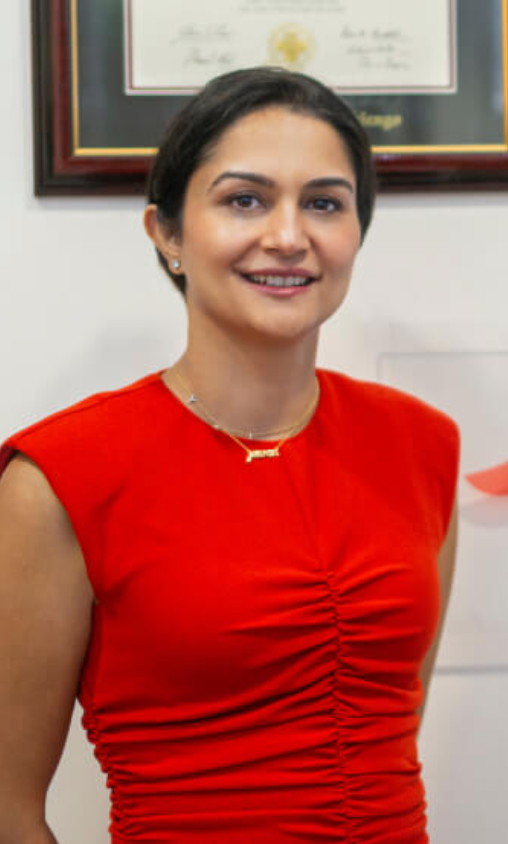
Principal Attorney Himani Bhardwaj, HBM Law Offices
Attorney Himani Bhardwaj founded HBM Law Offices in 2012 in Chicago, IL and moved the firm to West Des Moines, IA in 2013 to serve the growing community of fellow immigrants in her home state of Iowa. Serving as the Principal Attorney, she has devoted herself entirely to immigration cases for over a decade, specializing in complex issues, successfully representing hundreds of cases, working with over 60+ U.S. Embassies/Consulates, and reuniting families across borders. As a result, she brings 12+ years of experience in immigration law, a human rights background, and compassion from her personal immigration journey to represent aspiring immigrants from across all 50 states of the United States and around the world.
Why Choose Us?
We are immigrants and all about families.
If you have searched "immigration lawyer near me in Iowa", you might have come across our HBM Law Offices based in West De Moines (IA) known for being the immigrant’s immigration lawyer in the community of Iowa. With regional touch points in Iowa, Singapore, and India, we have been representing clients nationwide and across the world since 2012.
12+ years experience in family law and immigration law
HBM Law is one of Iowa’s few immigration law firms who are predominantly immigrants with a laser focus on family immigration. We stay ahead of all things on immigration practices in U.S. immigration law. Our immigration firm offers specialized care and attention for immigration matters that are difficult to find elsewhere in Iowa.

5-Star immigration lawyer for your immigration case success
We guide you every step of the way with tailored legal advice and support including green card, citizenship, fiancé(e) and spouse visa applications, waiver for unlawful presence (I-601A provisional waiver), fraud, misrepresentation, VAWA, removal of conditions (I-751 waiver), vaccination waivers, naturalization medical exemptions, and more. Our consistent 5-Star track record demonstrates our commitment to achieving successful outcomes for families, ensuring that you receive the best possible representation throughout your immigration process. Not only does this come from deep expertise in these practice areas, our principal immigration lawyer knows first-hand the complexities and difficulties of immigration issues.

Team of immigration lawyers who are all about families
Principal immigration attorney, Himani Bhardwaj, is an Indian national who became a naturalized U.S. citizen in 2010. If you’re a foreign national seeking support for you or your family's immigration journey, the HBM law firm’s team understands the unique cultural and linguistic needs of immigrants and their families navigating the United States legal system. We are by your side to advocate for your rights ensuring your applications are handled with respect and compassion.